I found two videos on YouTube that interest me:
This one has dramatic music and a strange ending, but nevertheless. The two things I want to point out about this are that in the first images you can see the speed with which the wildfire spread. In later images, you can see the Eucalyptus-bark fuel on the ground. Eucalyptus trees have evolved with "catastrophic" or stand-replacing fires, and have grown over time to be more fire conducive. The bark of certain kinds of Eucalyptus trees is a fuel that carries fire from tree to tree along the ground, or from the ground up into the canopy of a tree. Once ignited, strips of bark can remain lit and travel on the wind, creating spot fires 2 kilometers or more away from the initial flame. Some species of Eucalyptus have "serrotinous cones," which means that they only open in fire.
This video made me a little bit happier.
Showing posts with label fire ecology. Show all posts
Showing posts with label fire ecology. Show all posts
Monday, February 16, 2009


Tuesday, December 16, 2008
Fire, Fire Everywhere
(Written July, 2007)
It's hot here. The heat index is 110 today.
"This is getting expensive," I say to my boss, Jeff. "My pens keep exploding in the field. It makes me think I should taking data in pencil, like you've been bugging me to all season."
"Eh, don't bother," he says. "My mechanical pencil melted into a C-shape over my dashboard, and I can't use it."
How hot is it? It's too hot to burn! Not for the people, though. No one seems to care when the fire technicians faint. It's too hot for the trees. So burn season is over for now, and except for the occasional wildfire, we are done setting and fighting fires until December. This letter is a sketch of prescribed burning on the Gamelands.
-----

There is always a lot more destruction in conservation than any practicing conservationist is likely to tell you about. It can be embarrassing to admit what really goes on. I'm not just talking about the small stuff, like how we run over young oak trees at high speed in our trucks for that great "splat" noise they make, or dare one another to kick open fire ant mounds and try to outrun the swarm that pours out of the break. There is much larger-scale destruction involved in what we do, and although it is necessary, it can be challenging to accept. Appearances are that we get funded to do exactly what we want people in the rest of the world to stop doing, that is, cutting down trees and burning what remains. When you think protection and preservation, you generally don't picture the conservationists enacting wholesale destruction of functioning ecosystems by poison, by mowing, chopping, slashing and burning, but that is exactly what we do. We call it ethical and scientific, and it is the only way to keep a fire-dependent ecosystem going.
Open-canopy pine savanna used to be the predominant ecosystem here. The one percent of it that still remains is partially contained within the Sandhills Gamelands where I work. A pine savanna is a few pine trees scattered around a big, wavy grassland of gold and green, where the sunlight reaches the ground, and there are barely any shrubs or woody debris of any sort. At first glance, all you see is grass and a few trees, but this particular ecosystem is the most biodiverse in North America. Many of the species here are quite rare, and exist only here, or maybe in one or two other places nearby.
With fire suppression, trees crowd in and close the canopy, so that you lose the grasslands and everything in them. The survivors are trees and deerflies, and it doesn't take a lot to see that the ecosystem is extinct under that tree monoculture. If your goal is to restore the pine savanna, the solution is to thin the trees and encourage the grass understory to recolonize. This process involves cutting down over half the pines, and removing, by fire or by roller-chopping, almost all of the hardwood oak and shrub understory. You also need to let fire run through every once in awhile, as many of the plant species are dependent on it to reseed. Frequent fire also consumes the fuel load on the ground, and prevents wildfires from burning too hot and killing everything permanently.
It sounds good to restore fire-dependent ecosystems with prescribed burns, and it looks great. The vegetative response to fire is so strong that within two weeks, you can count over forty species of plants springing back up and even flowering, and within a month, you might not know that the site has been burned. But it's still tough to accept how much you have to kill to bring the ecosystem into this state.
On one of the fires in June, I watched a cavity tree burst into flames because it had not been raked, and lost my temper and judgment. A cavity tree represents many years of effort by many birds that excavate deep holes into a dead tree, and is, at this time of year, likely full of owl and woodpecker chicks. This is one of the specific bird habitats we are trying to promote, and there it was, burning up as I watched. I couldn't throw enough dirt onto the tree to put the fire out, and was burning my hands trying to do it. The Jakes stood on the side, knowing exactly how this was going to play out, saying nothing. I was yelling at them to set up the pumper truck and put out the tree. Brady tried to calm me down, saying that even if we were to douse the tree with water, the ground conditions were so dry and pine so flammable that it would keep setting itself on fire until it had burnt up. Which is to say, we were too late. There was nothing left to do but yell and cry, which is what I set about doing as soon as I could find solitude. The rest of the guys seem "burnt out," shall we say, on the destruction, and don't tend to lose their cool.
There is a calculus of loss that pervades prescribed fire conservation, and everyone deals with it in a different way. Some of the destruction can seem comical. During the Burn-a-Thon last winter, the fire crew was debriefed on "flaming bunnies." Tragic though they may be, bunnies that catch on fire pose serious problems. Flaming lagomorphs shoot out of the prepped area into adjoining blocks, catching them on fire as well, and then the fire crew has any number of wildfires to deal with in addition to their intentional one. The first time I heard this, I grimaced, and then laughed harder than I have in a long time. "Oh, it's funny," says JakeTwo, "but it's no joke."
Much of the sixty-thousand acre Sandhills conservation area gets burned in a three-year rotation in a patchwork of burn blocks, leaving enough viable habitat for nesting and wintering wildlife. The way a block is burned will depend on the wind and weather conditions, but usually the technicians light a "backing fire" along its windward edge. A backing fire is a low-intensity burn that eats away at the leaf litter slowly in the direction opposite to the wind. This creates a stopping edge for the main fire and a wildlife break for scared bunnies. You can just about walk through the backing fire when it is going, though I would recommend taking it at more of a run. Birds will continue singing up in the trees. After the backing fire has burned a good swath off one side of the block and created a burn buffer, the techs may light off a "head fire" on the opposite side of the site. The head fire is much hotter, and because it travels in the same direction as the wind, it can sweep through an area incredibly fast. The head fire will have up to thirty-foot flames, and can burn up small trees, brush, and dead snags.
Almost every day during burn season, we have these huge, set-on-purpose, sometimes out-of-control fires that send enormous plumes of smoke up into the sky and lay thick haze over the downwind landscape. The smoke is piney, heady, campfire-like, rich and aphrodisiac. I always drive to the plume to see the flames. In this attraction, I am no more complicated than a moth.

You can tell which of our two Fire Bosses is burning on any given day based on the quality of the smoke that rises up in an opaque column over some part of the horizon. Bill will burn between 50 and 300 acres at a time, and he burns hot and fast. The plume is dark and concentrated, and is gone in a matter of hours. Bill likes to light head fires, which will kill the larger oaks (a good thing, in this context), but also every animal on the site (not a good thing). Like Bill himself, his fires are small, intense, and you know exactly what to expect. The fire crew respect Bill, and they enjoy burning with him.
Lincoln's fires are another story altogether. Lincoln's plume is lighter because his fires are cooler, with one or two dangerously dark spots where areas are burning too hot, basically indistinguishable from a wildfire. (We also have wildfires, mostly because soldiers from Fort Bragg practice shooting flares without consulting the fire threat assessment for the area.) He prefers backing fires, which makes him—but only for this reason—a more conservative burner. Backing fires are lower intensity and do not clear out the oaks as well, but allow some animals to get out of the way. Lincoln will back a fire through 400 acres over the course of a day and a night, and often burns a thousand acres or more if the fire jumps the firebreak or the wind changes direction. But like Lincoln, his fires can be dangerous, unpredictable, and wild.
The fires are also a lot of fun! I joined Lincoln's crew for a burn in the drains, and he invited me to help survey the site. I didn't know what this meant, so I climbed on back of his ATV, tucked my feet in as best I could, and wrapped my arms around his waist. I was a bit troubled by the next part, as I was not expecting to shoot straight through the line of fire and into the burn, but thankfully, I had no time to process this event. He lit a drip torch and balanced it on my leg. We punched through walls of smoke and moving lines of blaze, running over downed trees at top speed and pouring out a swath of fire behind us. The fire line rushed up behind us in tall, coursing flames. My eyes were watering too much to see clearly, and there's not very much to breathe in a fire, so I just held on as best I could, and hid behind Lincoln's shoulder to shield myself from the roasting heat and smoke, breathing through his collar. He drove on, impervious to all these harms, and lit off the rest of the block behind us. I have never met anyone more reckless. I am enthralled.
Flames are mesmerizing but perilous. You want to be closer to their light and flickering dance, but they will burn you. As the flames consume grasses and ground cover, they turn the landscape to charcoal and spread out with the wind. Their movement invites chase, but their heat will throw you back. The air buckles and snaps, and heat hits you as painfully and as surely as well-aimed punches. Your skin stings and begins to cook, and you have fractions of seconds to decide where you need to be in case the wind changes, or in case it doesn't. Should the wind falter for a moment, you will find yourself in a choking sea of smoke, and you will find that there is really very little you can do to change your fate.
Standing next to a fire, a really big fire, will cause tempers to emerge from your personality that you might not ever have suspected were in you. Many things that would otherwise sound like bad behavior seem quite reasonable when you are standing next to sweeping, volatile peril. I am discovering loyalty to and respect for Fire Bosses I do not completely trust, though I believe from experience that loyalty outweighs trust in situations that are potentially life threatening. I also find that I feel much more alive on a fire than might be polite to run on about. Anyway, I'm having fun. I have until December to dwell on all this, or at least until the next Fort Bragg flare exercise.
It's hot here. The heat index is 110 today.
"This is getting expensive," I say to my boss, Jeff. "My pens keep exploding in the field. It makes me think I should taking data in pencil, like you've been bugging me to all season."
"Eh, don't bother," he says. "My mechanical pencil melted into a C-shape over my dashboard, and I can't use it."
How hot is it? It's too hot to burn! Not for the people, though. No one seems to care when the fire technicians faint. It's too hot for the trees. So burn season is over for now, and except for the occasional wildfire, we are done setting and fighting fires until December. This letter is a sketch of prescribed burning on the Gamelands.
-----

There is always a lot more destruction in conservation than any practicing conservationist is likely to tell you about. It can be embarrassing to admit what really goes on. I'm not just talking about the small stuff, like how we run over young oak trees at high speed in our trucks for that great "splat" noise they make, or dare one another to kick open fire ant mounds and try to outrun the swarm that pours out of the break. There is much larger-scale destruction involved in what we do, and although it is necessary, it can be challenging to accept. Appearances are that we get funded to do exactly what we want people in the rest of the world to stop doing, that is, cutting down trees and burning what remains. When you think protection and preservation, you generally don't picture the conservationists enacting wholesale destruction of functioning ecosystems by poison, by mowing, chopping, slashing and burning, but that is exactly what we do. We call it ethical and scientific, and it is the only way to keep a fire-dependent ecosystem going.
Open-canopy pine savanna used to be the predominant ecosystem here. The one percent of it that still remains is partially contained within the Sandhills Gamelands where I work. A pine savanna is a few pine trees scattered around a big, wavy grassland of gold and green, where the sunlight reaches the ground, and there are barely any shrubs or woody debris of any sort. At first glance, all you see is grass and a few trees, but this particular ecosystem is the most biodiverse in North America. Many of the species here are quite rare, and exist only here, or maybe in one or two other places nearby.
With fire suppression, trees crowd in and close the canopy, so that you lose the grasslands and everything in them. The survivors are trees and deerflies, and it doesn't take a lot to see that the ecosystem is extinct under that tree monoculture. If your goal is to restore the pine savanna, the solution is to thin the trees and encourage the grass understory to recolonize. This process involves cutting down over half the pines, and removing, by fire or by roller-chopping, almost all of the hardwood oak and shrub understory. You also need to let fire run through every once in awhile, as many of the plant species are dependent on it to reseed. Frequent fire also consumes the fuel load on the ground, and prevents wildfires from burning too hot and killing everything permanently.
It sounds good to restore fire-dependent ecosystems with prescribed burns, and it looks great. The vegetative response to fire is so strong that within two weeks, you can count over forty species of plants springing back up and even flowering, and within a month, you might not know that the site has been burned. But it's still tough to accept how much you have to kill to bring the ecosystem into this state.
On one of the fires in June, I watched a cavity tree burst into flames because it had not been raked, and lost my temper and judgment. A cavity tree represents many years of effort by many birds that excavate deep holes into a dead tree, and is, at this time of year, likely full of owl and woodpecker chicks. This is one of the specific bird habitats we are trying to promote, and there it was, burning up as I watched. I couldn't throw enough dirt onto the tree to put the fire out, and was burning my hands trying to do it. The Jakes stood on the side, knowing exactly how this was going to play out, saying nothing. I was yelling at them to set up the pumper truck and put out the tree. Brady tried to calm me down, saying that even if we were to douse the tree with water, the ground conditions were so dry and pine so flammable that it would keep setting itself on fire until it had burnt up. Which is to say, we were too late. There was nothing left to do but yell and cry, which is what I set about doing as soon as I could find solitude. The rest of the guys seem "burnt out," shall we say, on the destruction, and don't tend to lose their cool.
There is a calculus of loss that pervades prescribed fire conservation, and everyone deals with it in a different way. Some of the destruction can seem comical. During the Burn-a-Thon last winter, the fire crew was debriefed on "flaming bunnies." Tragic though they may be, bunnies that catch on fire pose serious problems. Flaming lagomorphs shoot out of the prepped area into adjoining blocks, catching them on fire as well, and then the fire crew has any number of wildfires to deal with in addition to their intentional one. The first time I heard this, I grimaced, and then laughed harder than I have in a long time. "Oh, it's funny," says JakeTwo, "but it's no joke."
Much of the sixty-thousand acre Sandhills conservation area gets burned in a three-year rotation in a patchwork of burn blocks, leaving enough viable habitat for nesting and wintering wildlife. The way a block is burned will depend on the wind and weather conditions, but usually the technicians light a "backing fire" along its windward edge. A backing fire is a low-intensity burn that eats away at the leaf litter slowly in the direction opposite to the wind. This creates a stopping edge for the main fire and a wildlife break for scared bunnies. You can just about walk through the backing fire when it is going, though I would recommend taking it at more of a run. Birds will continue singing up in the trees. After the backing fire has burned a good swath off one side of the block and created a burn buffer, the techs may light off a "head fire" on the opposite side of the site. The head fire is much hotter, and because it travels in the same direction as the wind, it can sweep through an area incredibly fast. The head fire will have up to thirty-foot flames, and can burn up small trees, brush, and dead snags.
Almost every day during burn season, we have these huge, set-on-purpose, sometimes out-of-control fires that send enormous plumes of smoke up into the sky and lay thick haze over the downwind landscape. The smoke is piney, heady, campfire-like, rich and aphrodisiac. I always drive to the plume to see the flames. In this attraction, I am no more complicated than a moth.

You can tell which of our two Fire Bosses is burning on any given day based on the quality of the smoke that rises up in an opaque column over some part of the horizon. Bill will burn between 50 and 300 acres at a time, and he burns hot and fast. The plume is dark and concentrated, and is gone in a matter of hours. Bill likes to light head fires, which will kill the larger oaks (a good thing, in this context), but also every animal on the site (not a good thing). Like Bill himself, his fires are small, intense, and you know exactly what to expect. The fire crew respect Bill, and they enjoy burning with him.
Lincoln's fires are another story altogether. Lincoln's plume is lighter because his fires are cooler, with one or two dangerously dark spots where areas are burning too hot, basically indistinguishable from a wildfire. (We also have wildfires, mostly because soldiers from Fort Bragg practice shooting flares without consulting the fire threat assessment for the area.) He prefers backing fires, which makes him—but only for this reason—a more conservative burner. Backing fires are lower intensity and do not clear out the oaks as well, but allow some animals to get out of the way. Lincoln will back a fire through 400 acres over the course of a day and a night, and often burns a thousand acres or more if the fire jumps the firebreak or the wind changes direction. But like Lincoln, his fires can be dangerous, unpredictable, and wild.
The fires are also a lot of fun! I joined Lincoln's crew for a burn in the drains, and he invited me to help survey the site. I didn't know what this meant, so I climbed on back of his ATV, tucked my feet in as best I could, and wrapped my arms around his waist. I was a bit troubled by the next part, as I was not expecting to shoot straight through the line of fire and into the burn, but thankfully, I had no time to process this event. He lit a drip torch and balanced it on my leg. We punched through walls of smoke and moving lines of blaze, running over downed trees at top speed and pouring out a swath of fire behind us. The fire line rushed up behind us in tall, coursing flames. My eyes were watering too much to see clearly, and there's not very much to breathe in a fire, so I just held on as best I could, and hid behind Lincoln's shoulder to shield myself from the roasting heat and smoke, breathing through his collar. He drove on, impervious to all these harms, and lit off the rest of the block behind us. I have never met anyone more reckless. I am enthralled.
Flames are mesmerizing but perilous. You want to be closer to their light and flickering dance, but they will burn you. As the flames consume grasses and ground cover, they turn the landscape to charcoal and spread out with the wind. Their movement invites chase, but their heat will throw you back. The air buckles and snaps, and heat hits you as painfully and as surely as well-aimed punches. Your skin stings and begins to cook, and you have fractions of seconds to decide where you need to be in case the wind changes, or in case it doesn't. Should the wind falter for a moment, you will find yourself in a choking sea of smoke, and you will find that there is really very little you can do to change your fate.
Standing next to a fire, a really big fire, will cause tempers to emerge from your personality that you might not ever have suspected were in you. Many things that would otherwise sound like bad behavior seem quite reasonable when you are standing next to sweeping, volatile peril. I am discovering loyalty to and respect for Fire Bosses I do not completely trust, though I believe from experience that loyalty outweighs trust in situations that are potentially life threatening. I also find that I feel much more alive on a fire than might be polite to run on about. Anyway, I'm having fun. I have until December to dwell on all this, or at least until the next Fort Bragg flare exercise.
Saturday, October 4, 2008
A Couple of Jakes
Jake (henceforth “Jake” and “JakeOne”) and Jake (“JakeTwo”) were best friends in college. They are both from Illinois, but they met at Murray State in Kentucky. JakeTwo has continued on as a Masters student in herpetology there. JakeOne has abandoned for the wild beauty of North Carolina. They are both fire technicians, they are both talented biologists, and they are, for the time being, my roommates.
At home, JakeTwo refers to OtherJake as “the drawling Hoosier.” Both of them enjoy harping on my mistake in thinking that Hoosiers are from Illinois. “Easygoing, drawling Hoosier,” I correct, refusing be misquoted. “We don’t drawl,” drawl the Jakes. At work, we distinguish between the Jakes by calling them Jake and Jacob, because they need to have different names on the fire radios. As “indelicate” as the fire crew can be, they recognize that it is wrong to use “JakeTwo” as a signifier for our newest Jake, and so call him Jacob, which is not his name. Touching.
Jake has offered to be called “Jeff” for historical reasons. Last year, there were eight Jeffs, but the new season of hires left us with half that. Jake recently got hired onto the fire crew permanently, earning him the title of “6362.” This, of course, means that JakeTwo will now be “Jake,” and Jake will be called “Six-three-six-two.” Confusing? Try listening in on the fire channel when Lincoln (Fire Boss 646—spoken as six-four-six) calls his fourth crewmember. “6464? 646. 6464… 646.” “646—6464 here.” Our Jake degeneracy is trivial.
Regardless of what we call them individually, everyone likes to refer to the Jakes as “a couple of Jakes,” which, in hunting terminology is a pair of immature male turkeys. Oh yes, as you might expect, the jokes are endless. Among the mildest: “You caught yourself a couple of Jakes,” says my boss, a Jeff, as they walk by. “I’m holding out for a Tom” is my standard retort.
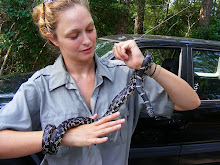
JakeOne is a tall, blond farm boy who grew up raising cattle, and also hell. He loves slow-pitch baseball and thinks vegetables are some sort of mean joke. And as I have mentioned, he is fond of snakes and photography, and terrifying combinations of the two. I am including links to some of his photographs below. There was a night at the house when an Eastern Hognose slid up to me as I was returning phone calls, and I called the guys out to take pictures. A hognose is not poisonous to people, but it is not small, either, and it puffs itself up, gapes, hisses and rattles like a poisonous snake. It will also mimic a cobra, which can cause you to panic if you are at all normal. Jake lay down on the ground next to the hognose and took about a hundred pictures with the snake striking at him. Every picture JakeTwo and I have of this snake has a piece of Jake’s camera lens or Jake himself in it. There is only so close sane people will get to any sort of wildlife regardless of toxicity, but Jake is apparently unaffected by this convention.

Jake immediately impressed me as a wild man, even before I met him. I had been living in the house with him for a number of days before I even saw him. I heard him coming and going, but as he never used the bathroom or kitchen or anything contained within these walls, I had to meet him at work. Events since then have reinforced my first impressions, as when I returned from shorebird surveys to find Jake, surrounded by a group of tired and wet men, skinning a four-foot catfish that he had nailed to the house. Some of the guys had gone hogging—also known as “grabbling” and “noodling”—which is a sport where you walk through a river and stick your fist under rocks until a large fish grabs it in its mouth, at which point, you try to hoist the thing out of the water and wrestle it until it is dead. Yeah, I’m not kidding. You have to let it bite you and clamp onto your wrist, because a catfish is too slippery to hold onto otherwise. An added benefit of noodling around here is that the water is so deep that you need someone to stand on you to keep you down on the riverbed while you are doing this. (Lincoln caught this one with Rupert standing on him.) Oh, and have I mentioned that this is snapping turtle country? No? Watch your fingers.

I tried to skin one side of the catfish, but Jake was cleaner, faster, and had his side skinned and filleted in a matter of minutes, before I even got done assessing the subdermal physiology of the fish. My side was bleeding like a freshly slaughtered cow, and I had the better knife. We had a 30-pound fish fry at work two days later, which might be the field-station equivalent of an office party with a swarm of cupcake-baking secretaries. Why does our workplace have its own deep-fat fryer, you ask? There are no simple answers to questions like this.
JakeTwo is shorter, darker, and tough as titanium jerky, but he has a warm smile and a sometimes-friendly if constantly obscene nature. This is a conversation I overheard between JakeTwo and my boss, and is fairly representative of conversations with JakeTwo:
“So, you think you’ll try your hand at grabbling next time ‘round?” questions Jeff.
“I gotta be honest with you, I just don’t think my testicles are big enough for that,” answers JakeTwo, as directly as possible.
Jeff, not exactly used to being addressed like this, thinks for a minute. “Maybe you could use them as bait?”
“Sir, they’re not even big enough for that.” I won’t transcribe the fire crew conversations that involve JakeTwo, but they are funny. You get the idea.
JakeTwo is also NASCAR fanatic, so his move to North Carolina is a trip to the Promised Land; a homecoming for the True Fan. Through playing NASCAR 07 on the PlayStation2, and watching movies like Days of Thunder and Talladega Nights with JakeTwo (these are basically the same movie except for a puma named Karen, and you can see shots of Rockingham in them if you are curious), I have learned the differences between open-wheel and stock-car racing, what makes a good driver, how you “line up under caution” behind the “pace car,” and how each of the NASCAR raceways differ in terms of shape, turn characteristics, surface friction, and so on. For example, our Rockingham raceway, “The Rock,” has unique track bed characteristics that make it sort of a gem of NASCAR tracks. The Rock is also narrower on one end than the other because it was built to accommodate a small and now non-existent wetlands on one side of the site, so each turn requires a different driving technique and strategy to get through. This is one of those details I cannot help but laugh about, as NASCARs get 4 miles to the gallon, and have a major impact on the local environment. Somewhere there is a point that is being missed.
For his Masters research, JakeTwo tracks and captures cottonmouths alone in remote areas. He should be wearing his medical bracelet with information as to his antivenom allergies, but he isn’t. “They can kill you with their venom, they can open their mouths almost 180 degrees and bite you from any angle, they’re lightning fast, incredibly strong, and they still have six defensive mechanisms so that they don’t have to attack you,” he says, when I ask him what he likes about cottonmouths in particular. I guess there’s something likable about all that, though I still run the other direction when I encounter one. He wants to end up in the Everglades. “Big, flowing water, big snakes,” he says, with that reserved passion of someone who truly loves his work. I’m sure he’ll get there eventually, but we have cottonmouths, and he has a snake hook, so he just might see fit to stay for a while.
What else can I say? The Jakes are good roommates. I am a fortunate girl.
Living in Constant Terror,
Erica
At home, JakeTwo refers to OtherJake as “the drawling Hoosier.” Both of them enjoy harping on my mistake in thinking that Hoosiers are from Illinois. “Easygoing, drawling Hoosier,” I correct, refusing be misquoted. “We don’t drawl,” drawl the Jakes. At work, we distinguish between the Jakes by calling them Jake and Jacob, because they need to have different names on the fire radios. As “indelicate” as the fire crew can be, they recognize that it is wrong to use “JakeTwo” as a signifier for our newest Jake, and so call him Jacob, which is not his name. Touching.
Jake has offered to be called “Jeff” for historical reasons. Last year, there were eight Jeffs, but the new season of hires left us with half that. Jake recently got hired onto the fire crew permanently, earning him the title of “6362.” This, of course, means that JakeTwo will now be “Jake,” and Jake will be called “Six-three-six-two.” Confusing? Try listening in on the fire channel when Lincoln (Fire Boss 646—spoken as six-four-six) calls his fourth crewmember. “6464? 646. 6464… 646.” “646—6464 here.” Our Jake degeneracy is trivial.
Regardless of what we call them individually, everyone likes to refer to the Jakes as “a couple of Jakes,” which, in hunting terminology is a pair of immature male turkeys. Oh yes, as you might expect, the jokes are endless. Among the mildest: “You caught yourself a couple of Jakes,” says my boss, a Jeff, as they walk by. “I’m holding out for a Tom” is my standard retort.
JakeOne is a tall, blond farm boy who grew up raising cattle, and also hell. He loves slow-pitch baseball and thinks vegetables are some sort of mean joke. And as I have mentioned, he is fond of snakes and photography, and terrifying combinations of the two. I am including links to some of his photographs below. There was a night at the house when an Eastern Hognose slid up to me as I was returning phone calls, and I called the guys out to take pictures. A hognose is not poisonous to people, but it is not small, either, and it puffs itself up, gapes, hisses and rattles like a poisonous snake. It will also mimic a cobra, which can cause you to panic if you are at all normal. Jake lay down on the ground next to the hognose and took about a hundred pictures with the snake striking at him. Every picture JakeTwo and I have of this snake has a piece of Jake’s camera lens or Jake himself in it. There is only so close sane people will get to any sort of wildlife regardless of toxicity, but Jake is apparently unaffected by this convention.

Jake immediately impressed me as a wild man, even before I met him. I had been living in the house with him for a number of days before I even saw him. I heard him coming and going, but as he never used the bathroom or kitchen or anything contained within these walls, I had to meet him at work. Events since then have reinforced my first impressions, as when I returned from shorebird surveys to find Jake, surrounded by a group of tired and wet men, skinning a four-foot catfish that he had nailed to the house. Some of the guys had gone hogging—also known as “grabbling” and “noodling”—which is a sport where you walk through a river and stick your fist under rocks until a large fish grabs it in its mouth, at which point, you try to hoist the thing out of the water and wrestle it until it is dead. Yeah, I’m not kidding. You have to let it bite you and clamp onto your wrist, because a catfish is too slippery to hold onto otherwise. An added benefit of noodling around here is that the water is so deep that you need someone to stand on you to keep you down on the riverbed while you are doing this. (Lincoln caught this one with Rupert standing on him.) Oh, and have I mentioned that this is snapping turtle country? No? Watch your fingers.

I tried to skin one side of the catfish, but Jake was cleaner, faster, and had his side skinned and filleted in a matter of minutes, before I even got done assessing the subdermal physiology of the fish. My side was bleeding like a freshly slaughtered cow, and I had the better knife. We had a 30-pound fish fry at work two days later, which might be the field-station equivalent of an office party with a swarm of cupcake-baking secretaries. Why does our workplace have its own deep-fat fryer, you ask? There are no simple answers to questions like this.
JakeTwo is shorter, darker, and tough as titanium jerky, but he has a warm smile and a sometimes-friendly if constantly obscene nature. This is a conversation I overheard between JakeTwo and my boss, and is fairly representative of conversations with JakeTwo:
“So, you think you’ll try your hand at grabbling next time ‘round?” questions Jeff.
“I gotta be honest with you, I just don’t think my testicles are big enough for that,” answers JakeTwo, as directly as possible.
Jeff, not exactly used to being addressed like this, thinks for a minute. “Maybe you could use them as bait?”
“Sir, they’re not even big enough for that.” I won’t transcribe the fire crew conversations that involve JakeTwo, but they are funny. You get the idea.
JakeTwo is also NASCAR fanatic, so his move to North Carolina is a trip to the Promised Land; a homecoming for the True Fan. Through playing NASCAR 07 on the PlayStation2, and watching movies like Days of Thunder and Talladega Nights with JakeTwo (these are basically the same movie except for a puma named Karen, and you can see shots of Rockingham in them if you are curious), I have learned the differences between open-wheel and stock-car racing, what makes a good driver, how you “line up under caution” behind the “pace car,” and how each of the NASCAR raceways differ in terms of shape, turn characteristics, surface friction, and so on. For example, our Rockingham raceway, “The Rock,” has unique track bed characteristics that make it sort of a gem of NASCAR tracks. The Rock is also narrower on one end than the other because it was built to accommodate a small and now non-existent wetlands on one side of the site, so each turn requires a different driving technique and strategy to get through. This is one of those details I cannot help but laugh about, as NASCARs get 4 miles to the gallon, and have a major impact on the local environment. Somewhere there is a point that is being missed.
For his Masters research, JakeTwo tracks and captures cottonmouths alone in remote areas. He should be wearing his medical bracelet with information as to his antivenom allergies, but he isn’t. “They can kill you with their venom, they can open their mouths almost 180 degrees and bite you from any angle, they’re lightning fast, incredibly strong, and they still have six defensive mechanisms so that they don’t have to attack you,” he says, when I ask him what he likes about cottonmouths in particular. I guess there’s something likable about all that, though I still run the other direction when I encounter one. He wants to end up in the Everglades. “Big, flowing water, big snakes,” he says, with that reserved passion of someone who truly loves his work. I’m sure he’ll get there eventually, but we have cottonmouths, and he has a snake hook, so he just might see fit to stay for a while.
What else can I say? The Jakes are good roommates. I am a fortunate girl.
Living in Constant Terror,
Erica
Monday, August 25, 2008
Letters Home

I began a series of letters when I moved from Massachusetts to North Carolina. I couldn't have prepared myself for the move, or what I would be doing... I was more used to cities than wild areas. I knew no one, had no family in the south, but even though it was a big chance to take, it was worth it.
I'll start posting the letters I wrote home, sequentially, over the next month or so.
--------------
Hi Everyone-
I have arrived safely in North Carolina.
I live in Rockingham, a town with its own Wal-Mart. Nine thousand people live here, and I'll give you one guess where you can find them. I live in the bird sanctuary on a gorgeous lake. We are overrun with birds, lizards, and dragonflies. I work in Hoffman, a town of 600 people. They have a rusty water tower, and that's about it… a post office that could fit into my current bedroom, and two gas stations. Though in Rockingham proper, it appears that Hoffman has a raceway that seats 78,000 people, but since the raceway was closed down in order that a much larger, 115,000-seater could be built further north, there's not much going on out there. I will say that after a day in the Sandhills, I am happy to see these signs of "civilization."
I live with a fire technician named Jake, who, like the rest of the burn crew, has a slightly cooked look to him. Jake is an easy-going, drawling Hoosier who enjoys taking extreme close-ups of deadly snakes. He knows an incredible amount about the local wildlife, and we spend nice evenings out on the porch with our binoculars and field guides, when we are not watching "the Channel," in this case CBS, and scrutinizing "Survivor, Fiji" for wilderness survival tips. Occasionally, other scientists stay here with us, and some sort of bizarre two-for-one sale brings us a second "fire-technician Jake" next month as our final permanent roommate.
Day One in the Sandhills Wildlife Depot managed to seem both completely ordinary and completely foreign simultaneously, making me think that I have not quite resolved into which of the "many universes" from quantum theory I am destined to inhabit. There was the normal paperwork to fill out, I-9's to file, direct deposit forms, and so on. For the project, papers on Bachman's sparrows and Red-Cockaded woodpeckers to collect and study, field equipment to gather and store in the field truck. This time, I have a tow-chain and snake chaps in addition to clipboards, data sheets, and nest-monitoring tools. At lunch, though, I was sitting down with men named "Rupert," "Lincoln" and "Lee," sharing the cornbread and stew. I remarked that the vertebra that I happened to be chewing on seemed awfully mammalian. A long pause. "That's whah ah shoot mah rabbits in the heyud," offered Lincoln obliquely, spitting out a piece of lead shot. That guy cracks me up.
Later in the day, we visited the sites I will be studying. Most of them are Longleaf pine restorations, host to trees sporting hundreds of goofy green pom-poms and some very rare birds. There are also "the drains," which seem to be some sort of hell reserved specifically for ornithologists. Each site offers particular challenges, but let me back up a little.
North Carolina has taken a cue, perhaps the wrong kind of cue, from Smokey the Bear, and has introduced into the conservation panoply "Burnin' Bob White" (a small quail with a large rake) and "Drip Torchin' Tom Turkey." Go ahead and read that out loud. Drip-Torchin' Tom Turkey is a biologically accurately drawn turkey, wing outspread, pouring burn fuel on the ground with a tool that might be recognizable to fire technicians, but otherwise requires the unlikely name of its possessor to provide a clue as to its function. I know it sounds improbable, but this is North Carolina's plan for converting the masses to the environmental mindset. Given what I've seen of the predominant culture here, I think they might do better with Jesus in flame-retardant robes, or Jesus in a burning pine forest, or even just a bumper sticker proclaiming "Drip-Torch for Jesus!" But maybe in the course of questionable conservation practices, the pyromaniac holiday bird is not so bad. Let me offer this entry into the category of most questionables: "Chomper."
Chomper is the adopted child of the environmental movement of the 1960's and 70's, when conservation was apparently done by swap meet. At some point, Florida walked away with some of North Carolina's turkeys (unfortunately, not our famous drip-torcher), and we received "Chomper," a 6-foot gator that was placed into the Sandhills conservation area lake. This with the aim of making skinny-dippers and revelers think twice about whether they would like to lose a limb along with their clothing and inhibitions. A testament to the take-no-prisoners strategy for conservation, it did work, but now we have a lonely alligator, far from home, who basks in the too-cool Carolina sun. Does he dream about the long walk back to Florida and the clear blue swimming pools that await his return? I wonder if he longs for those vast, open golf courses and the slow-moving prey they offer, or looks up at the sky, to ponder "Why is there only me?" Did we rip him untimely from a more sophisticated world, where he feasted on marshmallows and wrestled with Attorneys General-to-be? "What do I do to avoid Chomper?" I ask naively, thinking that they are putting me on, that there is no gator. "Git out of the truck on this sahd and run fir the first hundred meters. You outrun 'im, you'll be jest fahn. Those snake chaps maht slow you down, but then agin, so maht the snakes." "Will he really come after me?" "Maht could be." Just like a scientist to talk in meters.
End of Day One.
I shouldn't be so down on the conservation around here, though. They do an awfully nice job of it. Next installment, Chiggers Debunked! No, they don't burrow into your skin! Or maybe I'll actually get around to saying what I'm supposed to be doing here. Take care of yourselves, and I promise to do the same.
-Erica
Saturday, July 19, 2008
Our Forests Are Adapted to Burn
I had an article in the Fayetteville Observer on the 14th, which I am posting below. It is an op-ed about fire ecology and the wildfires that have broken out in the eastern part of the state, known as the Evans Road Fire in the Pocosin Lakes National Wildlife Refuge, and a separate fire in the Great Dismal Swamp National Wildlife Refuge.
You can track the progress of the wildfires, these and the Californian ones, on InciWeb.
You can track the progress of the wildfires, these and the Californian ones, on InciWeb.
Published on Monday, July 14, 2008
Our Forests Are Adapted to Burn
“Southern forests need fire in the same way that rain forests need rain.”
This was a favorite expression of Larry Landers, director of research at Tall Timbers Research Station in Florida. Larry spoke a truth that we in North Carolina continue to ignore at our peril: Our forests are fire-dependent. That is, they have evolved to be flammable, and require frequent fire for their very existence.
What we are seeing now in Pocosin Lakes National Wildlife Refuge and the Dismal Swamp are examples of costly and dangerous after-the-fact responses to large-scale wildfires.
Our current tendency is to suppress fire, but when fire suppression is coupled with unwise development, it inevitably leads to greater destruction in both human and ecological terms. Meanwhile, excluding fire from fire-evolved areas leads to the “shading out” of hundreds of understory plants and loss of habitat for the animals that depend on them. At the same time, pine needles and dead, fire-ready materials accumulate on the forest floor in place of a living understory.
Before the advent of modern fire-suppression techniques, lightning strikes would introduce fires to the coastal and central South every one to three years. These frequent fires would thin and regenerate the trees, consume fuel loads on the ground and stimulate seed production of understory plants.
In the modern, densely settled landscape, the vast majority of naturally occurring fires are quickly put out. With the long-term buildup of tinder on the forest floor, fires that do reach any size tend to burn at the canopy level and are vastly more difficult to control. These over-story burns endanger people, property, houses and negatively impact air quality for miles around.
With North Carolina’s population set to double in the next 50 years, we urgently need to take sensible steps to reconcile the need for our forests to burn with the desires of North Carolinians to live in safety and comfort. Consider the following three proposals.
First, we need many more frequent controlled burns, otherwise known as “prescribed fires,” as an alternative to the policy of after-the-fact suppression of wildfires. North Carolina's State Forest Service, rather than the governor’s office, should determine when burning bans should be enacted and when they should be lifted. Too often, the decision to impose a burning ban is influenced more by popular opinion than by an informed balancing of risk reduction and habitat restoration. Such a transfer of decision-making power would make North Carolina’s fire management more like the rest of the South’s.
Second, people who settle in this region should be encouraged to do so in a “Firewise” manner. For example, home insurance rates could be set at a much lower rate for houses built with metal roofs and bare-ground yards (as was popular in the old South) than conventional houses built with flammable materials and surrounded by grass lawns (which only act as tinder). In fire-prone areas, new buildings that do not conform to “Firewise” standards should be denied building permits.
With out-of-staters relocating to North Carolina in record numbers, we will soon have living here a large group of people who do not remember how the land was once managed with fire and have no context for understanding it. Proper economic incentives will produce the safest kind of development.
Third, burning bans that are in place need separate categories to distinguish yard-waste and trash burns from habitat burns. In this way, national parks and state-owned game lands can still use their fire crews and burn responsibly during drier, more wildfire-prone times, while yard-waste burns, which are not usually attended by fire crews and fire-fighting equipment, are postponed.
With responsible fire management and “Firewise” development, we can help protect our state’s natural beauty and biological diversity along with the lives and property of its human residents.
Erica Newman is a wildlife biologist with the National Park Service and a state Division of Forest Resources prescribed burner. She is also a member of the North Carolina Prescribed Fire Council.
Welcome
Welcome to my blog!
I am, and always have been, a lover of birds. When I moved South, I began to realize that the challenges of preserving Southern forests and all of the life in them is fundamentally tied up in reintroducing fire into the savannas, the prairies, the pocosins, and indeed, all of the Southern ecosystems. I became a North Carolina Division of Forest Resources Prescribed Burner, and joined the North Carolina Prescribed Fire Council. I now try to educate people about prescribed burning, and the long and interesting history of fire-management in the South.
I took the title of this blog from a Hank Williams song by the same name, and I thought it would be appropriate to make it my first post.
Settin' the Woods on Fire
Hank Williams, Sr.
Comb your hair and paint and powder
You act proud and I'll act prouder
You sing loud and I'll sing louder
Tonight we're settin' the woods on fire!
You're my gal and I'm your feller dress up in my frock and yeller
I'll look swell but you'll look sweller settin' the woods on fire
We'll take in all the honky tonks tonight we're having fun
We'll show the folks a brand new dance that never has been done
I don't care who thinks we're silly you'll be daffy I'll be dilly
We'll order up two bowls of chili
Settin' the woods on fire!
I'll gas up my hot rod stoker we'll get hotter than a poker
You'll be broke but I'll be broker
Tonight we're settin' the woods on fire!
We'll sit close to one another up our street and down the other
Tonight we'll have ball oh brother, settin' the woods on fire
We'll put aside a little time to fix a flat or two
My trey and tubes are doin' fine but the air is showin' through
You clap hands and I'll start howlin' we'll do all the law's allowin'
Tomorrow I'll be right back plowin'
Settin' the woods on fire!
(Hear it here: http://www.youtube.com/watch?v=F3hzYRVAkUs)
I am, and always have been, a lover of birds. When I moved South, I began to realize that the challenges of preserving Southern forests and all of the life in them is fundamentally tied up in reintroducing fire into the savannas, the prairies, the pocosins, and indeed, all of the Southern ecosystems. I became a North Carolina Division of Forest Resources Prescribed Burner, and joined the North Carolina Prescribed Fire Council. I now try to educate people about prescribed burning, and the long and interesting history of fire-management in the South.
I took the title of this blog from a Hank Williams song by the same name, and I thought it would be appropriate to make it my first post.
Settin' the Woods on Fire
Hank Williams, Sr.
Comb your hair and paint and powder
You act proud and I'll act prouder
You sing loud and I'll sing louder
Tonight we're settin' the woods on fire!
You're my gal and I'm your feller dress up in my frock and yeller
I'll look swell but you'll look sweller settin' the woods on fire
We'll take in all the honky tonks tonight we're having fun
We'll show the folks a brand new dance that never has been done
I don't care who thinks we're silly you'll be daffy I'll be dilly
We'll order up two bowls of chili
Settin' the woods on fire!
I'll gas up my hot rod stoker we'll get hotter than a poker
You'll be broke but I'll be broker
Tonight we're settin' the woods on fire!
We'll sit close to one another up our street and down the other
Tonight we'll have ball oh brother, settin' the woods on fire
We'll put aside a little time to fix a flat or two
My trey and tubes are doin' fine but the air is showin' through
You clap hands and I'll start howlin' we'll do all the law's allowin'
Tomorrow I'll be right back plowin'
Settin' the woods on fire!
(Hear it here: http://www.youtube.com/watch?v=F3hzYRVAkUs)
Subscribe to:
Posts (Atom)

 Posts
Posts

